
Grain sector players from Uganda and Kenya have been urged to prioritise quality standards and value addition to unlock greater opportunities in regional trade and strengthen East Africa’s agricultural economy.
The call was made during the launch of the Kenya-Uganda Grain Learning Mission at Fairway Hotel in Kampala, a four-day peer-to-peer agribusiness exchange organised by the Eastern Africa Grain Council (EAGC) in partnership with Danish Industries East Africa.
The initiative has brought together agricultural small and medium enterprises from both countries to explore opportunities in cross-border trade, strengthen market linkages, and share best practices across the grain value chain.
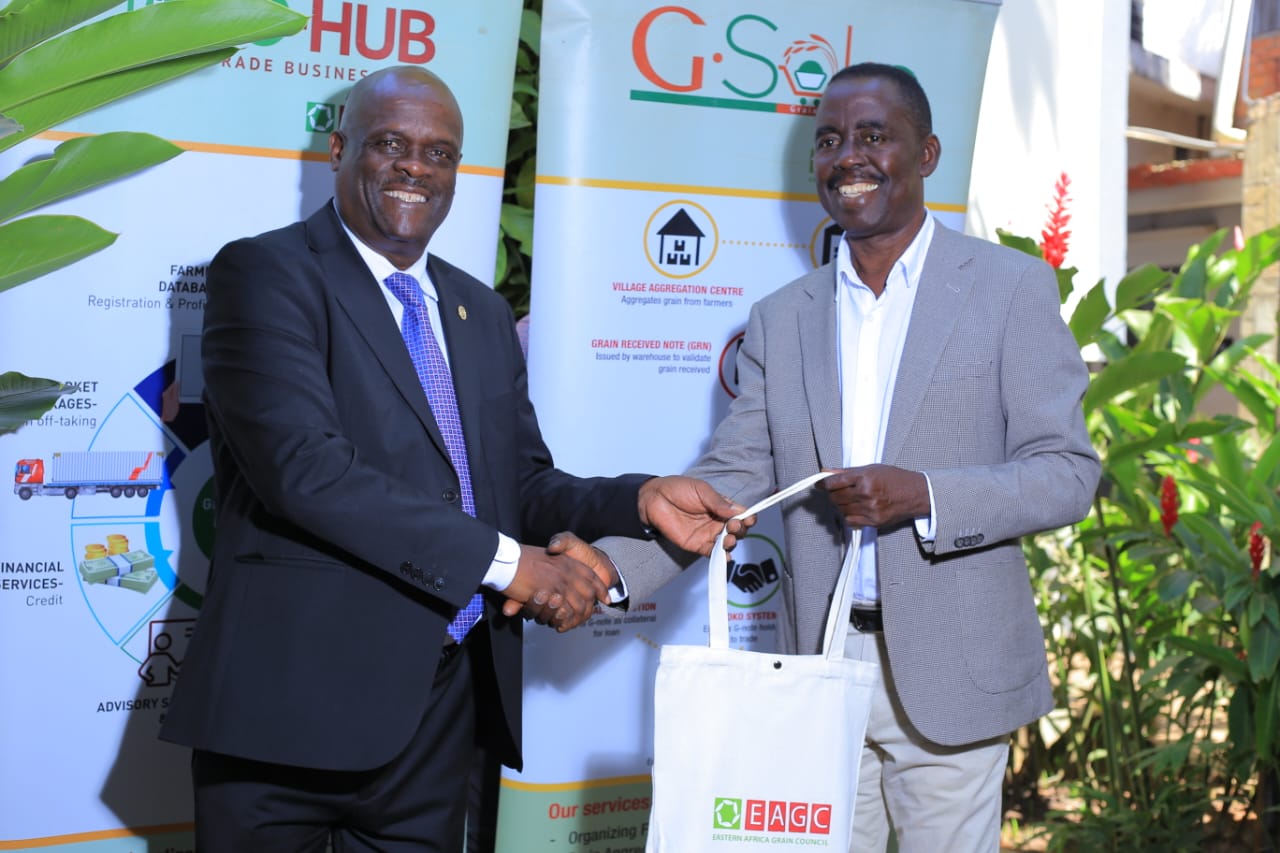
Speaking at the launch, Uganda’s Commissioner for External Trade at the Ministry of Trade, Industry and Cooperatives, Cleopas Ndorere, said maintaining quality standards and investing in value addition are critical to sustaining regional markets and enhancing competitiveness.
He cautioned traders against dishonest practices that compromise product quality and erode trust among buyers.
“We have been hearing complaints from many people who buy grain across the country about quality. You buy a bag of 100 kilograms and half the maize is full of cobs. That is very unfortunate and it kills honest business,” Ndorere said.
He urged traders and producers to consistently meet agreed standards.
“If you deliver 100 kilograms of maize, deliver 100 kilograms based on the quality and standards agreed upon. Do not add stones or cobs. You may think you are winning today, but it is not sustainable in the long run,” he added.
Ndorere also challenged farmers and agribusinesses to embrace value addition rather than exporting raw produce.
“His Excellency the President has preached this as a gospel. When we add value, we keep our jobs here,” he said.
He explained that value addition supports local processing industries, creates employment opportunities, and enables countries to retain valuable by-products such as animal feed.
The Commissioner further highlighted government efforts to improve grain trade through the enforcement of sanitary and phytosanitary standards, reduction of aflatoxin contamination, improved packaging, and implementation of mutual recognition arrangements with Kenya to ease certification procedures.
He said initiatives such as the Simplified Trade Regime, the Warehouse Receipt System, and digital border management systems are intended to support farmers and traders while lowering transaction costs.
Ndorere also revealed plans to transition from one-stop border posts to “no-stop border posts” through the adoption of smart gate technology and electronic clearance systems to facilitate faster movement of goods across borders.
He encouraged participants to use the learning mission to strengthen partnerships and improve standards throughout the grain sector.
“Let us focus on building compliance, raising quality standards and forging partnerships that improve the livelihoods of the communities we serve,” he said.
EAGC Uganda Country Director Herbert Kyeyamwa said the initiative is intended to create a more competitive, integrated, and resilient grain sector across East Africa.
“We are gathered here because of a shared vision to build a more integrated, competitive and resilient grain sector in East Africa,” Kyeyamwa said.
He noted that the mission, which has attracted 12 enterprises from Kenya and about 20 from Uganda, seeks to address persistent challenges including limited market access, post-harvest losses, and poor quality management.
“The purpose of this mission is to directly confront these challenges by creating a unique platform for practical learning and strategic interaction,” he said.
Kyeyamwa urged participants to focus on achieving tangible outcomes through business partnerships.
“The business-to-business sessions commencing today are the engine for trade and collaboration between our nations. They are designed to convert conversations into concrete trade intent forms and, ultimately, formalised agreements,” he added.
The four-day programme includes field visits to grain processing facilities, cooperatives, and trading hubs across Uganda as participants seek practical lessons to strengthen regional grain trade and agricultural value chains.
